2 hr 30 min
French Croissant Baking Class with a Chef
Master the art of authentic croissant-making at a prestigious Parisian pastry school with expert guidance
Reserve
Hand-picked by our editors — only the best 5 baking workshops from 43 reviewed.
Verified partners for every tour, free cancellation where available, and instant confirmation on every booking.
2 hr 30 min
Master the art of authentic croissant-making at a prestigious Parisian pastry school with expert guidance
Reserve
3 hr
Master the art of authentic French croissant-making in an intimate bakery setting with a professional pastry chef
Reserve
2 hr 30 min
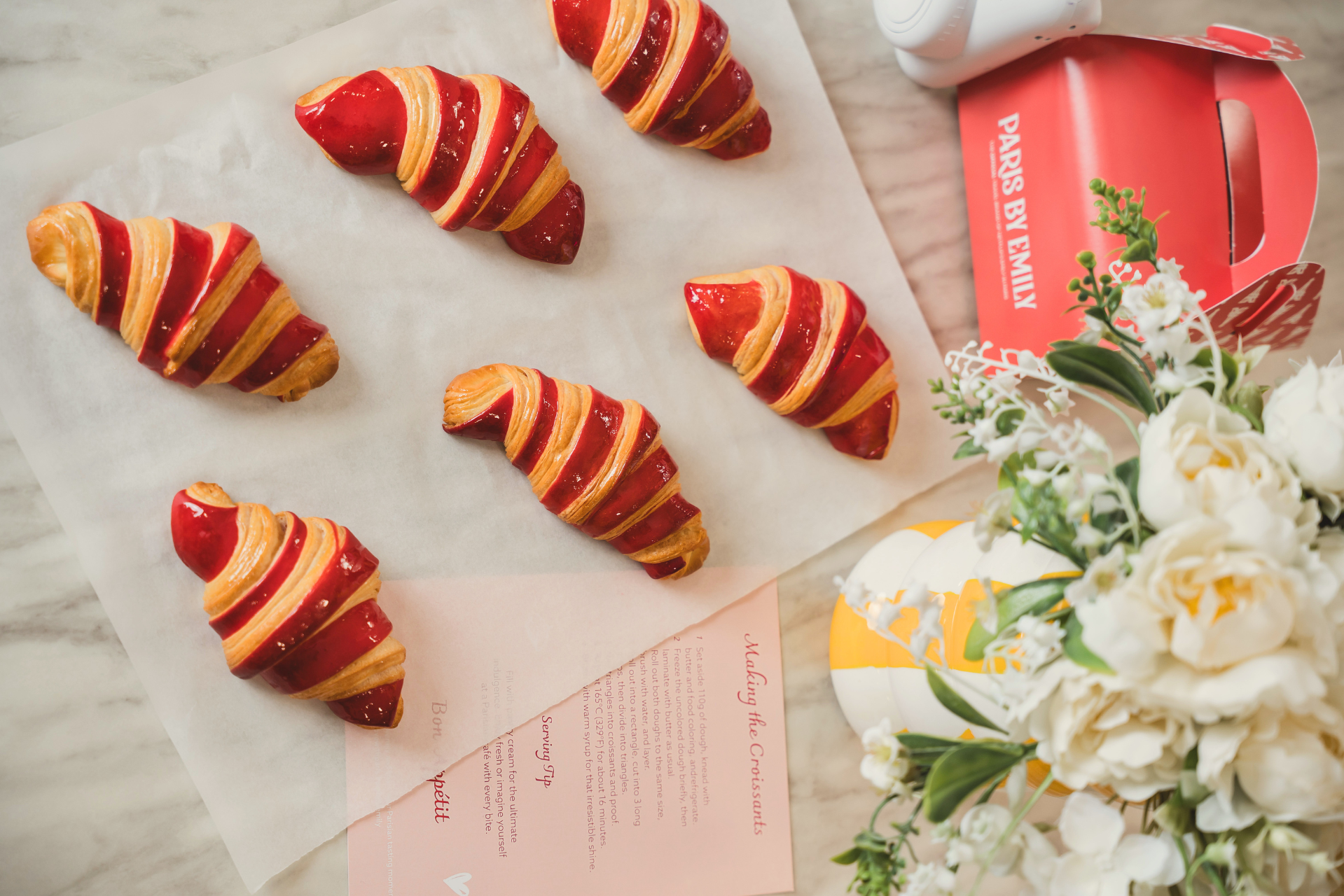
Learn traditional lamination with a pro pastry chef in a themed Parisian kitchen inspired by the series
ReservePrices from verified partners. Availability updates in real time at checkout. Free cancellation policies apply where shown.
The landmarks, rooms, and views travelers on this tour remember — all visible on a single visit.
Learn the precise art of folding butter into dough for perfect layers.
Bake your creations in a professional kitchen environment using standard industrial ovens.
Master the technique of creating the perfect croissant dough from basic ingredients.
Understand how to select high-quality French butter and flour for authentic results.
Watch a master baker prepare the dough before attempting your own session.
A private croissant making class paris provides hands-on mastery for the dedicated baker, whereas pastry walking tours offer a broader survey of the city's finest artisan shops.
| Feature | Top pick Private Baking Class | Pastry Walking Tour |
|---|---|---|
Skill development level |
High technical instruction | Observation only |
Depth of ingredient knowledge |
In-depth professional theory | Surface level overview |
Physical activity level |
Stationary kitchen work | Moderate walking required |
Time commitment |
3–4 hours | 2–3 hours |
Product takeaway quantity |
Batch of fresh pastries | Single samples at stops |
Booking requirement |
Private croissant making class paris tickets | Private croissant making class paris tour |
| See tickets → |
Verdict: Choose the culinary workshop for deep technical mastery or the walking experience to sample a wide array of local patisserie treats.
Choose your ticket, select your date, and reserve in under two minutes. Secure checkout handled by our verified partner.
Instant confirmation by email, with a mobile voucher you can save offline. No printing, no queuing at a collection desk.
Arrive at the entrance, show your voucher on your phone, and walk in. Most tickets include priority or skip-the-line access.
Practical details for your visit straight from our verified partners — hours, access, rules, and how to get there.
Paris, France
Exact address provided after booking
Use the Paris Metro to reach central districts. Check your booking confirmation for the nearest station name.
Ride-sharing apps are widely available throughout the city. Drop-off occurs at the verified meeting address.
Casual and comfortable attire is recommended for this private croissant making class paris. Participants should wear closed-toe shoes and avoid loose clothing near mixing equipment.
Storage space is limited, so please bring only essential items to your private croissant making class paris session. Large luggage is not permitted in the kitchen area.
Photography is encouraged during your private croissant making class paris. Please ensure your equipment does not obstruct the chef or other participants.
The venue for this private croissant making class paris is wheelchair accessible. Please notify the operator of specific mobility requirements upon booking.
This private croissant making class paris is suitable for families with children. Participants under 18 must be accompanied by an adult.
Participants will consume the items baked during the private croissant making class paris. Inform the host of any allergies at least 48 hours prior to arrival.
Best time to go, insider tips, nearby landmarks, and the cancellation fine print — flip through to skim what matters to you.
How crowds, weather, and events shift across the year.
August offers warm weather and fewer crowds in the city. Morning sessions at 09:00 are ideal for fresh baking.
Mild temperatures make walking to your private croissant making class paris pleasant. September is ideal for local harvest events.
Indoor sessions provide a cozy escape from the cold. December is popular for holiday pastry techniques.
Cooler mornings are perfect for dough resting. April and May provide the best light for food photography.
Small details that turn a good visit into a great one.
Secure your private croissant making class paris spot early to ensure availability. Popular dates fill up several weeks ahead.
Choose a 09:00 start time for your private croissant making class paris to allow for proper dough proofing.
You will be standing for the duration of your private croissant making class paris. Choose supportive footwear.
Contact the host immediately after booking if you have dietary restrictions. This is vital for the private croissant making class paris menu planning.
Aim to reach the vicinity of your private croissant making class paris location 10 minutes before your scheduled start.
Non-bookable sights within a short walk — free to visit, easy to pair.
World-famous art museum housing the Mona Lisa.
Iconic waterway perfect for scenic walks.
Historic masterpiece of French Gothic architecture.
Beautiful public garden located between the Louvre and Place de la Concorde.
Flexible, no hidden fees.
Cancellations must be requested according to the booking confirmation terms. Full refunds are typically subject to the lead time specified in your private croissant making class paris reservation.
Hand-picked options within walking distance — pick a district for vibe, or a specific hotel for convenience.
Historic hotel located near the city center.
Charming area with many boutique lodging options.
Comfortable and centrally located modern stay.
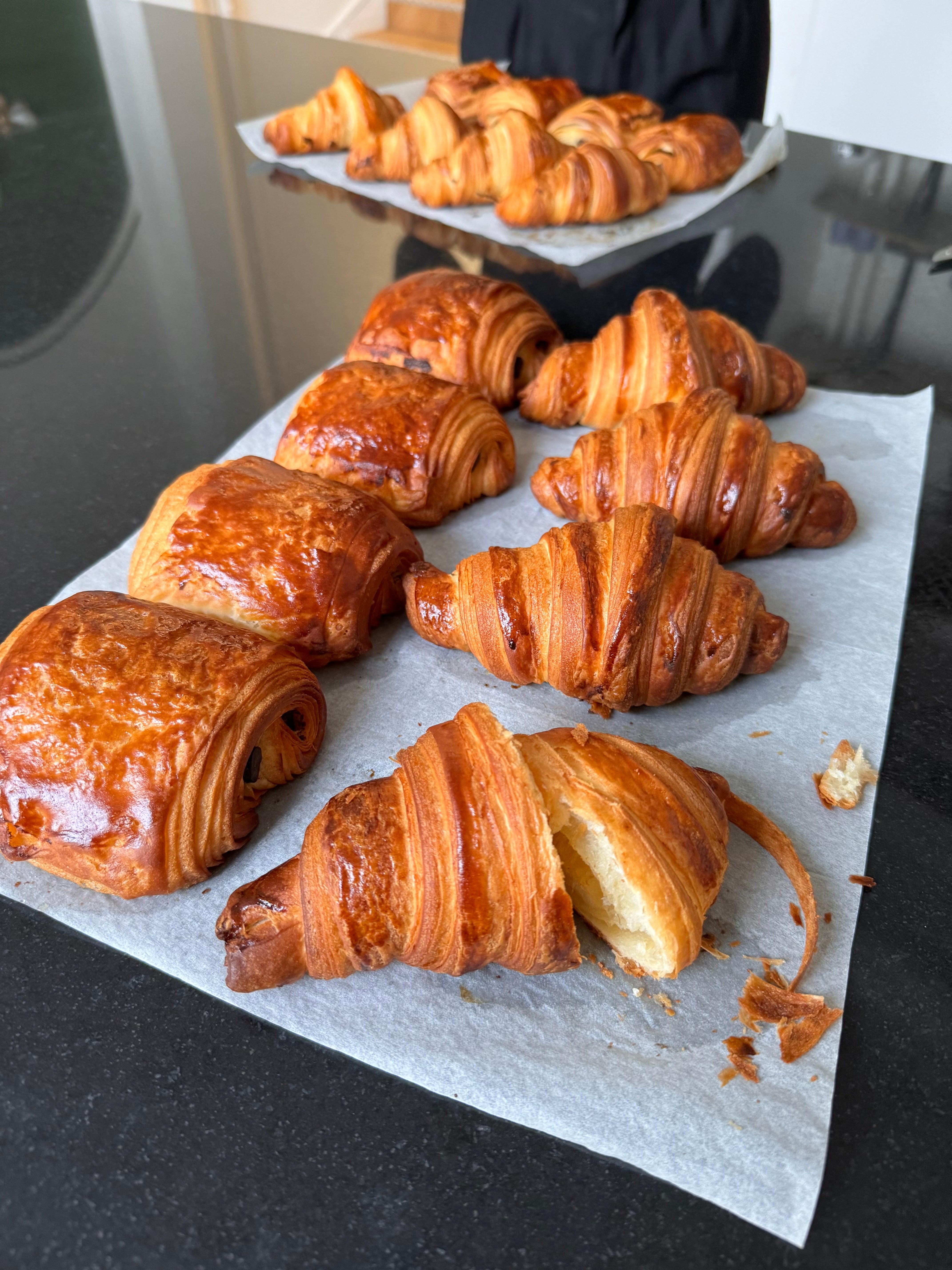
The croissant arrived in Paris not as a French invention but as an Austrian crescent, the kipferl, imported by Marie Antoinette's Viennese bakers in the 1770s. It took another century for Parisian boulangerie tradition to transform it through lamination—the painstaking process of folding butter between thin sheets of yeasted dough to create the airy, shattering layers that define the modern croissant. By the early twentieth century, the technique had become synonymous with French craftsmanship, taught in bakery schools across the capital and refined daily in neighbourhood ovens from Montmartre to the Marais. Today, a private croissant making class Paris offers access to that centuries-old tradition, not as spectacle but as participatory craft. Sessions run in working bakeries and dedicated culinary studios, often in the ninth and eighteenth arrondissements, where small groups—typically four to eight participants—work alongside professional bakers who have spent years perfecting dough temperature, butter ratios, and folding rhythm. The instruction is methodical: you learn to gauge dough elasticity by touch, to keep butter cold enough to layer but pliable enough to fold, and to recognise the subtle visual cues that signal proper fermentation. These are not shortcuts or tourist-friendly simplifications; they are the same techniques taught in French culinary academies. The significance of hands-on baking workshops in Paris extends beyond the immediate pleasure of warm pastry. France holds its boulangerie heritage under legal protection—since 1998, the title artisan boulanger can be claimed only by professionals who mix, shape, and bake on the premises, using traditional methods. A croissant baking class Paris preserves and transmits that knowledge to an international audience, allowing visitors to understand why Parisian pastry commands global reverence. The workshops also reflect a broader cultural shift: where once culinary tourism meant restaurant reservations, it now increasingly means learning to replicate techniques at home. The croissant, with its visible architecture of laminated dough and its demanding technique, serves as the ideal medium for that education. Most private sessions include both croissants and pain au chocolat, and many offer variations—almond croissants, filled croissants, or seasonal fruit pastries—so participants leave with a repertoire rather than a single recipe. The classes typically run two to three hours, beginning with dough preparation and ending with participants tasting their own work alongside espresso or tea. The chefs emphasise the importance of resting periods and temperature control, two variables that separate professional results from amateur approximations. In a city where bakery queues form before dawn and croissants are judged with the seriousness of wine, these workshops offer not just a recipe but a credential.

"The croissant arrived in Paris not as a French invention but as an Austrian crescent, transformed over a century through lamination into the layered pastry that defines French craftsmanship."
A step-by-step walkthrough of the visit — what you'll see, how long each stage takes, and the details that matter.
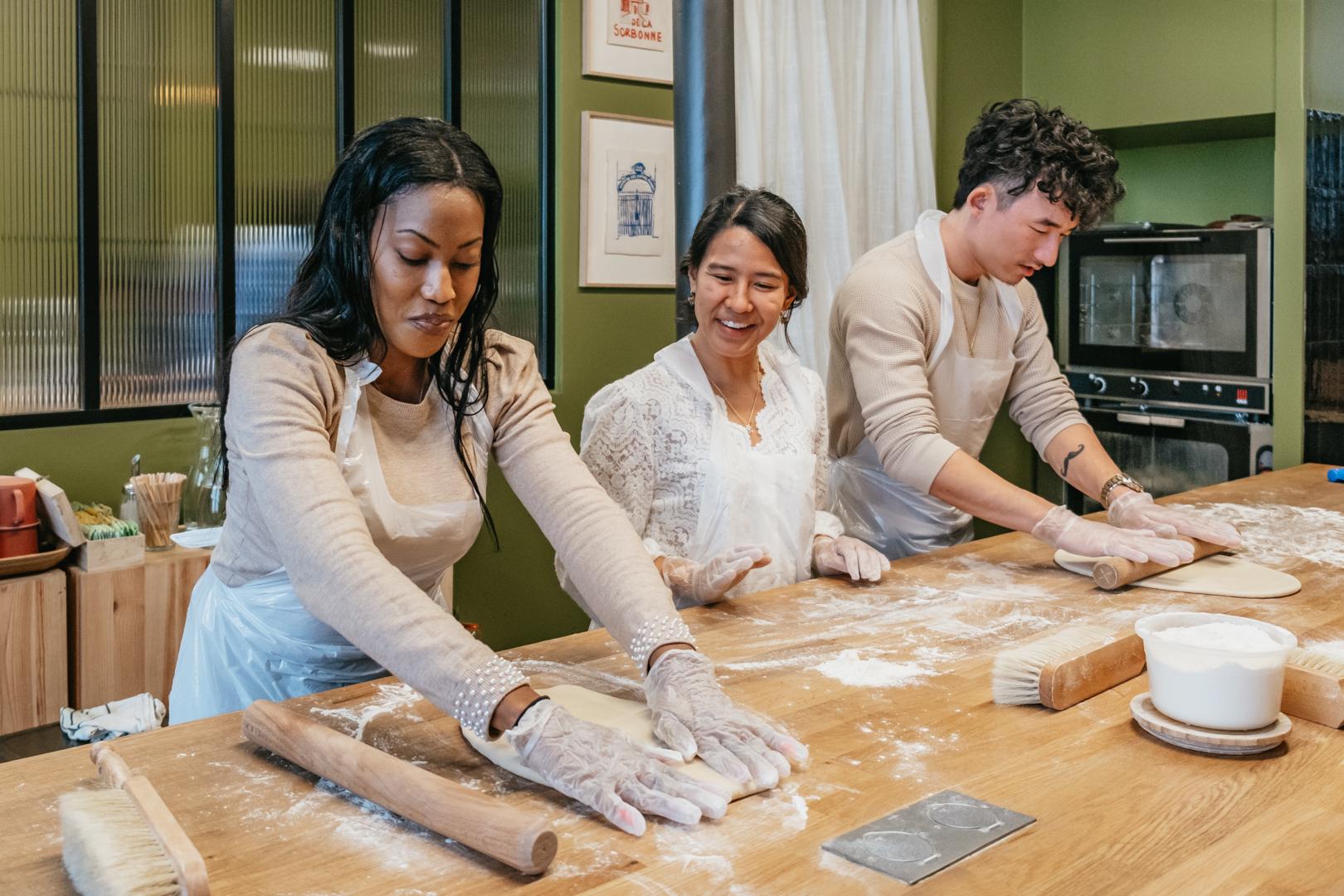
You arrive at a compact studio kitchen in the ninth arrondissement or a Montmartre bakery with flour-dusted wooden counters and copper mixing bowls arranged in a row. The chef, often a third-generation baker or a graduate of the École de Boulangerie, walks you through the ingredients: French butter with 82% fat content, type 55 flour, fresh yeast, and cold water measured to the gram. You begin by mixing the détrempe, the base dough, kneading until it forms a smooth, elastic mass that pulls cleanly from the bowl. After a brief rest, you flatten a block of butter between sheets of parchment, then encase it in the rolled dough, sealing the edges to trap the fat inside. The lamination begins: you roll the dough into a long rectangle, fold it into thirds like a letter, then rotate and repeat. The chef corrects your pressure, your angle, your speed. Between each turn, the dough rests in a refrigerator to keep the butter from melting into the flour. After the final fold, you roll the dough thin, cut triangles, and shape each one into a crescent, tucking the tip beneath the curve. The croissants proof under a cloth until they double in size, then bake at 200°C for fifteen minutes. You watch through the oven glass as they rise, the layers separating into golden, flaking shelves. When they emerge, still crackling, you taste one warm, the interior soft and buttery, the crust brittle enough to shatter at the first bite.
The venue is open daily from 09:00–19:00. This applies to all private croissant making class paris sessions.
Yes, the facility is accessible for guests with mobility needs. Please confirm your requirements for the private croissant making class paris in advance.
Space is limited, so please bring only minimal belongings to your private croissant making class paris. Large items are not permitted.
Yes, families are welcome, though children under 18 must be accompanied by an adult for the private croissant making class paris.
Yes, advance booking is essential to secure your private croissant making class paris spot. Prices start at 110 EUR per person.
Cancellations are managed per your booking confirmation. Ensure you review the terms regarding the 110 EUR starting fee for your private croissant making class paris.
Yes, you will consume what you bake during the private croissant making class paris. Inform the staff of allergies ahead of time.
The specific address for your private croissant making class paris will be provided in your booking confirmation email.
The best time is between 09:00–14:00. Morning starts are recommended for the best results in your private croissant making class paris.